
🌍 Hypocrisy on Social Media? Why Some People Support Iran Online, but Prefer Living in the U.S. or Israel
- Apr 3
- 2 min read

Scroll through social media during any geopolitical conflict, and you’ll notice a pattern.
Strong opinions.
Clear sides.
Loud support.
Lately, one narrative keeps showing up:
People openly supporting Iran online, while living in, or preferring to live in, countries like the United States or Israel.
So what’s really going on?
Is it hypocrisy, or something more complicated?
📲 The Rise of “Online Alignment”

Social media doesn’t reward nuance.
It rewards:
strong takes
emotional reactions
simplified narratives
In conflicts involving countries like Iran and Israel, people often align with what they perceive as:
resistance
anti-Western sentiment
or opposition to global power structures
That alignment doesn’t always reflect where they would actually choose to live.
🧠 Reality vs Online Narratives
There’s a growing gap between:👉 how conflicts are discussed online👉 and what life actually looks like on the ground
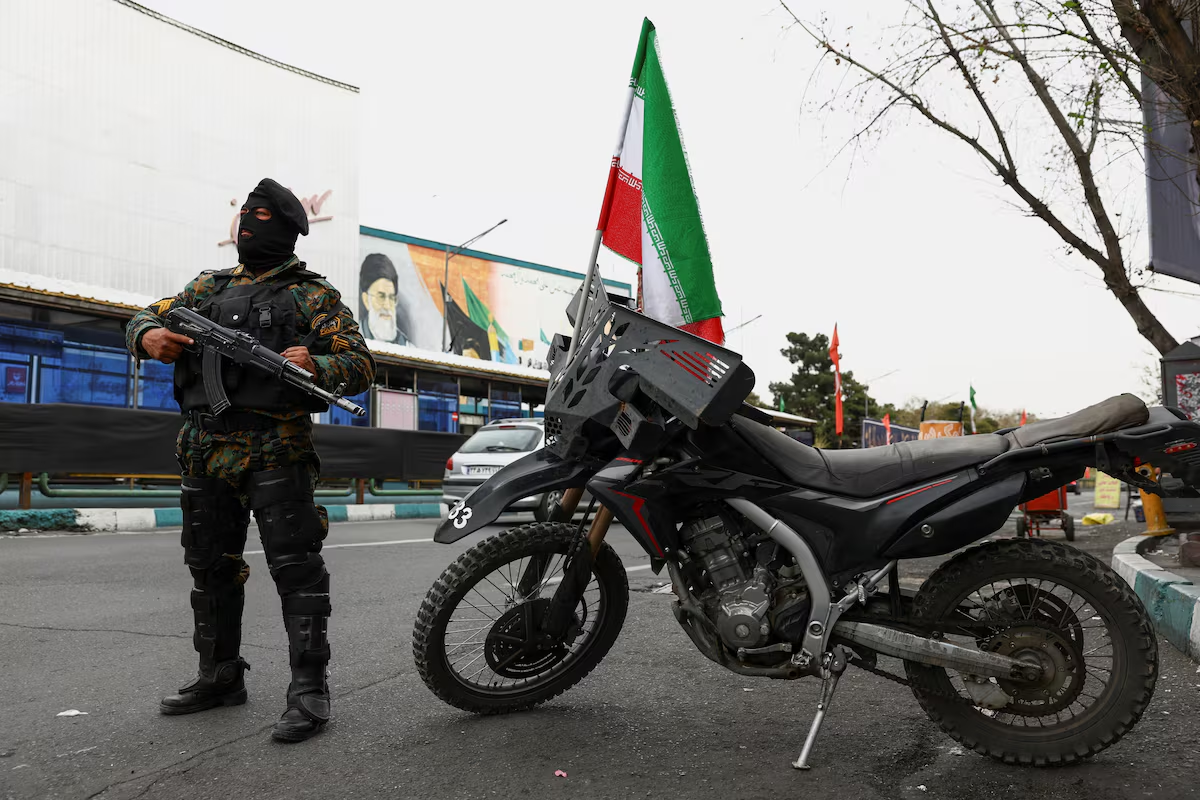
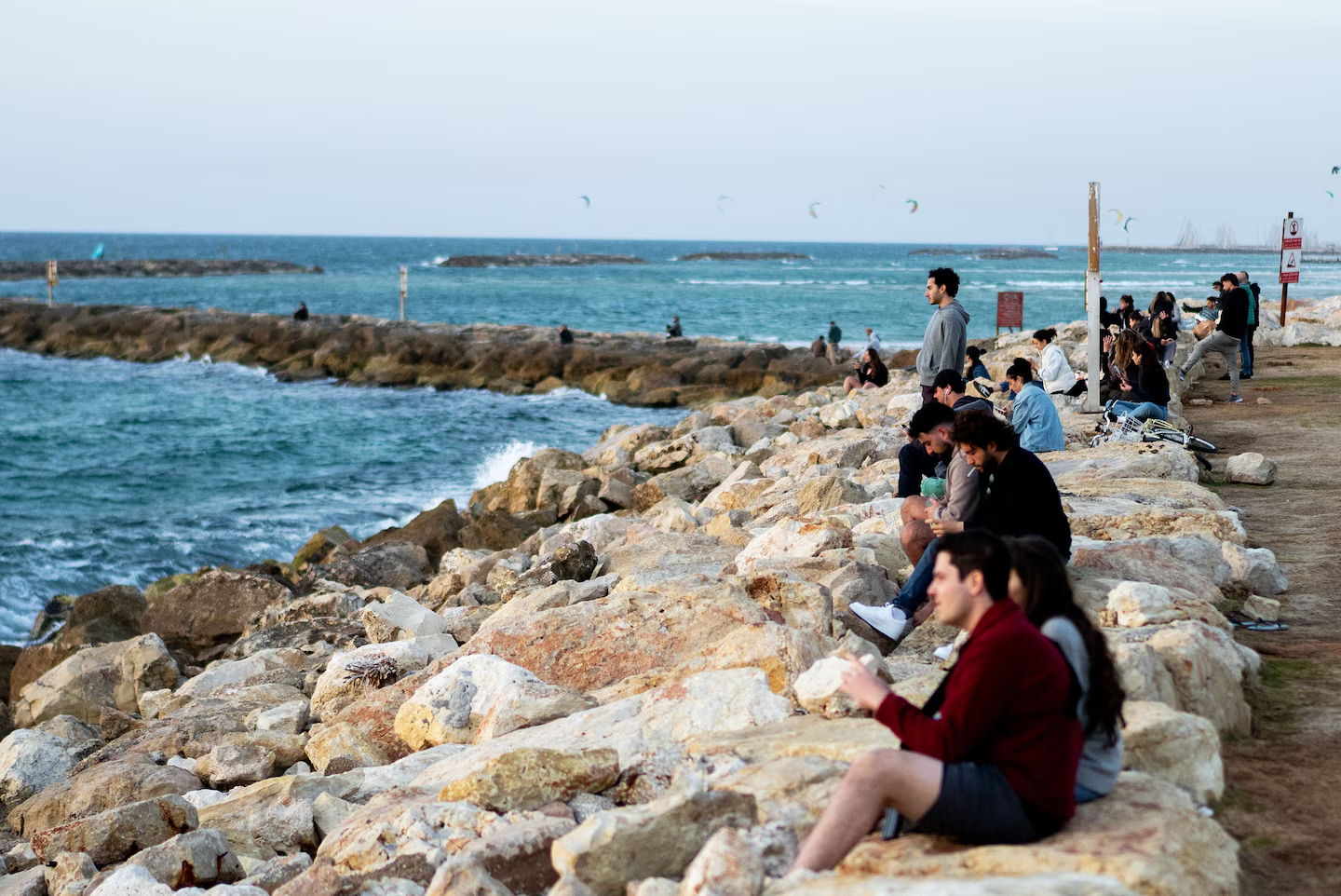


Recent reporting highlights that:
governments like Iran actively monitor and restrict online expression, including arrests tied to digital activity
lawmakers are increasingly concerned about misinformation and manipulated narratives spreading on platforms
and even analysts warn that what people see online often doesn’t match real-life conditions in conflict zones
That disconnect matters.
⚖️ Freedom vs Ideology
One of the underlying tensions in this debate is the difference between:
supporting an idea or political position
and living under a system shaped by that ideology
Countries like:
United States
Israel
offer freedoms such as:
open internet access
freedom of speech
mobility and economic opportunity
Meanwhile, countries like Iran operate under:
stricter media control
heavy internet censorship
limitations on political expression
That contrast is often missing in online conversations.
📊 The Role of Algorithms and Influence

Social media doesn’t just reflect opinions, it shapes them.
Research shows that:
online debates around Iran are often influenced by coordinated messaging and digital amplification
certain narratives get boosted more than others depending on engagement and platform dynamics
At the same time:
misinformation and propaganda have become central to modern conflicts
So what you’re seeing online is not always organic.
🔍 So Is It Hypocrisy?
It depends on how you define it.
For some, it looks like contradiction:👉 supporting one system👉 while choosing to live in another
For others, it’s more nuanced:
people can oppose foreign policy without rejecting a country entirely
individuals can support populations—not governments
online expression doesn’t always reflect personal life choices
🧠 The Bigger Pattern

This isn’t just about Iran.
It’s about how people engage with global issues online.
simplified narratives
emotional alignment
limited context
And most importantly:
👉 distance from real-world consequences
⚖️ The Bottom Line
Social media makes it easy to take a side.
Real life is more complicated.
Supporting a country, a cause, or a narrative online doesn’t necessarily mean someone would choose to live under that system.
And that gap, that tension, is where this conversation really lives.


Comments