
TSA Might Be Staffed With ICE Agents Starting Today. Are You Excited or Afraid?
- Mar 22
- 2 min read
Updated: Mar 23

A proposal suggesting that immigration enforcement officers could be integrated into airport security operations is raising eyebrows, and deeper concerns, across the country.
At first glance, the idea might sound like a simple logistical adjustment. Bringing ICE agents into TSA environments could, in theory, strengthen coordination between agencies and enhance national security efforts. But the reality is far more complex, and the reaction has been anything but neutral.
Airports are already one of the most controlled and monitored public spaces in the United States. Every passenger is screened, every movement is regulated, and every interaction is documented. Introducing immigration enforcement into that environment changes not just how airports function, but how people experience them.
For some, the idea brings reassurance.
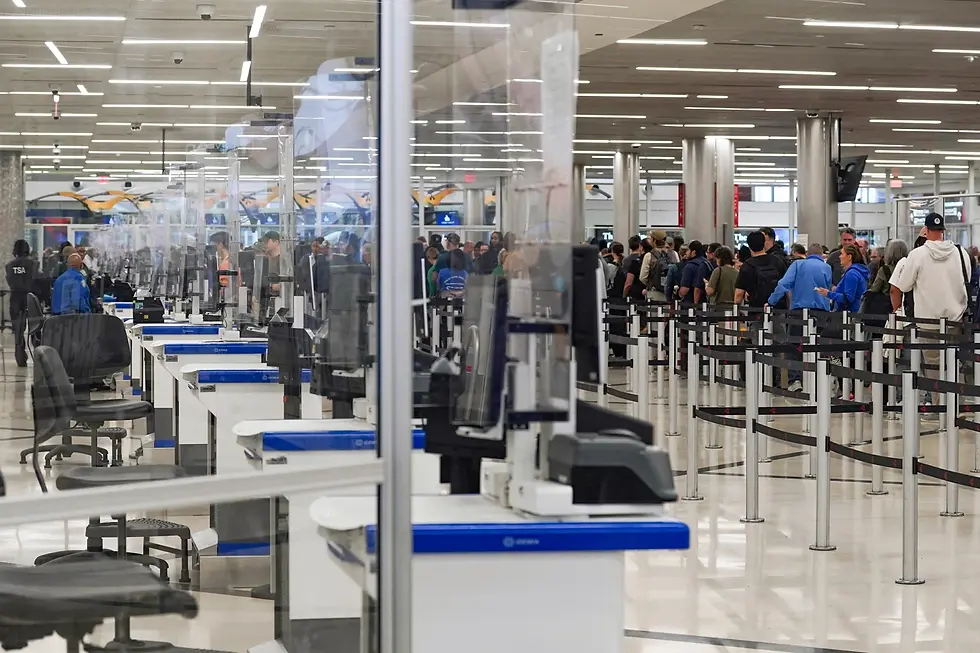
Supporters argue that in an era of increasing global uncertainty, tighter security is a reasonable response. They see the integration of ICE and TSA as a proactive measure, one that could prevent threats before they materialize. From this perspective, more enforcement equals more safety.
But for others, the reaction is the opposite.
Critics see this as a clear expansion of surveillance and authority into everyday life. They worry about the normalization of immigration enforcement in spaces that were not previously associated with it, particularly for domestic travelers. The concern is not just about policy, it’s about precedent.
Once enforcement expands into one space, where does it stop?
There’s also the human factor.
For immigrant communities, airports are already high-stress environments. The possibility of encountering ICE agents during routine travel, even for individuals with legal status, introduces a level of anxiety that goes beyond standard security concerns. It raises questions about profiling, discretion, and the potential for misuse of power.
Even for U.S. citizens, the shift could change how travel feels.

Will people begin to second-guess routine trips? Will certain groups feel more targeted than others? And how will this affect trust in institutions that are supposed to serve the public?
These are not abstract questions.
They go to the core of how security is defined in a modern society.
Is it about protection, or control?
Is it about preventing threats, or managing populations?
There’s also a broader political context at play.

Immigration has long been one of the most divisive issues in American politics. Policies that expand enforcement tend to be interpreted not just as security measures, but as ideological statements. This proposal is no exception. It sits at the intersection of national security, immigration policy, and civil liberties.
And that intersection is rarely comfortable.
For UPFRONT DISPATCH, the question is not simply whether this policy will be implemented. It’s what it represents.
A shift in how power is exercised.A shift in where enforcement shows up.And a shift in how ordinary people experience something as routine as travel.
So again, the question stands.
Are you excited, or are you paying attention?



Comments